


How to Talk to Children About Food and Health
- Discover My World

- Aug 13, 2025
- 3 min read
Talking about food and health with young children isn’t about diets, strict rules, or calorie counts, it’s about helping them build a positive, balanced relationship with food right from the start.
Children aged 0 - 5 are little sponges, they learn from what they see, hear, and experience every single day. Your words, actions, and attitudes around food play a big part in shaping how they’ll think about eating as they grow.

Here are some gentle, practical ways you can guide them.
1. Use Positive, Age-Appropriate Language
Make food fun by talking about what it does for our bodies rather than labelling it as “good” or “bad.”
“Carrots help you see in the dark!”
“Eggs help you grow big and strong.”
“Milk makes our bones strong for jumping and climbing.”
By using simple, playful explanations, children connect food with how it makes them feel and what it helps them do – rather than feeling guilt or shame for eating something.
2. Talk About Balance, Not “Good” vs “Bad” Foods
Instead of creating a black-and-white list of foods, introduce the idea of “everyday foods” and “sometimes foods.”
Everyday foods, fruits, veggies, grains, water, dairy, proteins, are the building blocks that help our bodies grow, think, and play.
Sometimes foods,
like lollies, cakes, or chips, are enjoyed as an occasional treat, not for every meal.
This approach teaches moderation without making certain foods more tempting simply because they’re “forbidden.”

3. Let Children Listen to Their Bodies
Young children are surprisingly good at knowing when they’re hungry and when they’re full. Encourage them to tune into their body’s signals. Avoid saying things like:
“You have to finish your plate.”
“No dessert unless you eat that.”
Instead, trust their instincts. Keep offering a variety of healthy foods so they can learn to make their own choices over time.
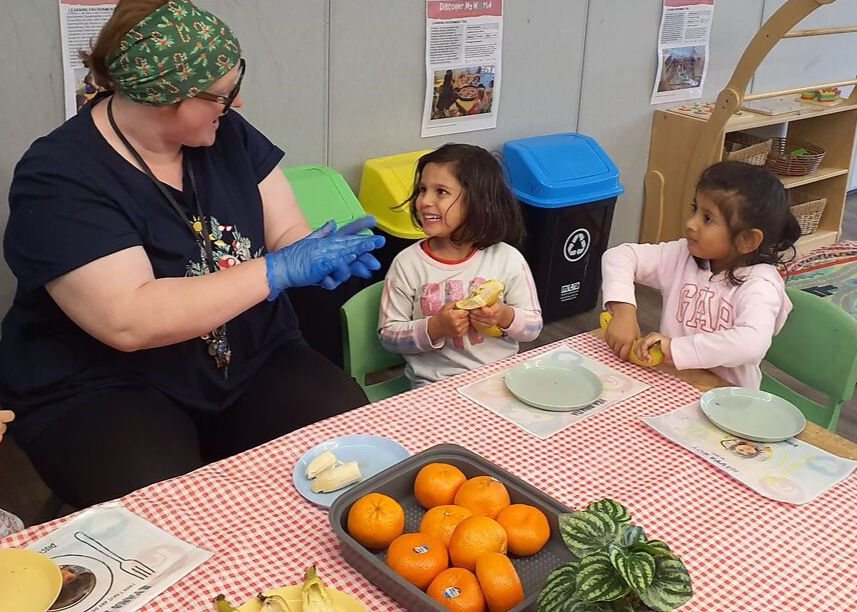
4. Involve Them in Food Routines
Children are more likely to try new foods when they’ve had a hand in preparing them. Invite them to:
Choose a fruit or vegetable at the shop
Wash berries or salad leaves
Stir, mash, sprinkle herbs, or assemble their own plate
Not only does this build confidence, but it also makes healthy eating an enjoyable, shared experience.
5. Avoid Using Food as a Reward or Punishment
Food should never be tied to behaviour or worth. Skip phrases like:
“If you’re good, you’ll get a lolly.”
Instead, acknowledge their actions directly:
“I’m proud of how you packed away your toys so quickly.”
Separating food from reward helps children maintain a healthy relationship with eating, one that’s based on hunger, enjoyment, and nourishment rather than control or pressure.
6. Be a Role Model & Keep It Body-Positive
Children are watching and listening all the time. Show them that you enjoy a variety of healthy foods and speak kindly about your own body. Try saying:
“I feel full, my tummy is happy now.”
“My legs are strong from walking to the park.”
Avoid negative talk about your body or others’ bodies. Positive body language helps children grow up valuing what their bodies can do, not just how they look.
Our Final Thoughts: Healthy eating isn’t just about the food itself, it’s about the feelings and habits that surround it. By talking to children in positive, age-appropriate ways, involving them in food routines, and modelling balanced behaviour, you’re setting them up for a lifetime of happy, healthy eating habits. At Discover My World, we believe that every mealtime is a chance to learn, connect, and celebrate the amazing things our bodies can do.
Check out one of our favourite DMW recipes
Nut-free cacao and coconut bliss balls Ingredients:
1 cup (90g) rolled oats
2 tbsp cacao powder or cocoa powder
12 pitted fresh dates
1 cup (80g) desiccated coconut
2 tbsp maple syrup
2 tbsp desiccated coconut, extra to coat Step 1
Process rolled oats, cacao powder or cocoa powder, dates, desiccated coconut and maple syrup in a food processor until almost smooth and well combined.
Step 2
Place another 2 tablespoons desiccated coconut on a plate. Roll 2-tablespoons portions of mixture into balls. Roll in coconut to evenly coat. Place on a lined tray in the fridge for 1 hour or until set. Store in an airtight container in the fridge for up to 2 weeks.



Comments