


Nurturing Positive Food Experiences and Body Image in the Early Years
- Discover My World

- Sep 3, 2025
- 3 min read
Updated: Sep 4, 2025
From the very beginning of life, children are forming their first ideas about themselves—and about food. Even in the preschool years, the way we talk about eating and bodies can leave a lasting mark on a child’s confidence, wellbeing, and relationship with food. That’s why at Discover My World, we believe it’s essential to provide children with positive food experiences and body-positive messages right from the start.

Why It Matters

Research shows that early attitudes towards food and body image can influence long-term health and happiness. While eating disorders and self-esteem struggles are often associated with adolescence, the seeds are sown much earlier. Preschoolers are already absorbing ideas about which foods are “good” or “bad,” and they’re noticing how adults talk about their own bodies.
By creating supportive environments both at home and in early learning settings, families and educators can give children the tools to grow up with healthier habits, stronger self-esteem, and a lifelong appreciation for food.
Positive Food Experiences
Food is so much more than fuel—it’s about joy, discovery, and connection. In the early years, mealtimes are opportunities for children to learn social skills, explore new tastes, and feel part of a community.
Here are some simple ways we encourage positive food experiences at DMW:
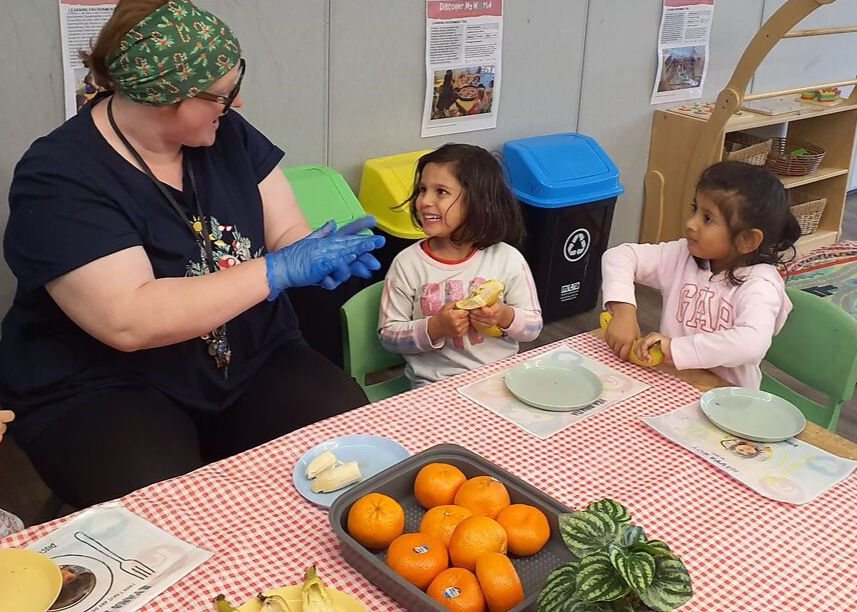
Eating together – Children learn by watching. Sharing meals with educators and peers shows them that food is something to enjoy, not rush.
Exploring new foods – We invite curiosity instead of pressure: “What colour is it?” or “Would you like to smell it?” can spark interest without creating stress.
Avoiding labels – Instead of calling foods “good” or “bad,” we focus on what different foods do for our bodies. Some give us energy, some help us grow, and some are just fun to enjoy.
Body-Positive Messaging
Children listen closely to how adults talk about bodies. Even casual negative comments about appearance can shape how children see themselves.
Instead, we choose words that celebrate strength, energy, and growth:
Use descriptors like strong, healthy, fast, growing, and energetic.
Focus on what bodies can do—running, climbing, hugging—rather than how they look.
Avoid comparisons. Every child grows at their own pace, and that diversity is something to celebrate.
The Role of Families and Educators
Children thrive when home and early learning environments send the same message. Families can model balanced eating at home, while educators foster healthy habits in group settings. Together, we can:
Demonstrate enjoyment of a variety of foods.
Speak kindly about our own bodies in front of children.
Encourage movement and active play as joyful, not tied to appearance or weight.

Practical Tips for Families
★ Offer a variety of foods and let your child decide how much to eat.
★ Use neutral language—swap “junk food” for “sometimes food.”
★ Celebrate abilities (“You climbed so high today!”) instead of appearance.
★ Share meals whenever possible to build connection and routine.
★ Keep trying with new foods—it can take many attempts before a child accepts a new taste.
Our Commitment at DMW
At Discover My World, we know that food, language, and relationships shape much more than eating habits — they influence how children see themselves and how they feel about belonging. Guided by the Early Years Learning Framework (EYLF), we create environments where children feel safe, respected, and supported to make positive choices about their wellbeing.
By approaching mealtimes thoughtfully, using positive and inclusive language, and building strong partnerships with families, we are fostering children’s confidence, resilience, and healthy relationships with their bodies.
This commitment reflects:
Outcome 1: Children have a strong sense of identity — as they feel safe, secure, and respected for who they are.
Outcome 3: Children have a strong sense of wellbeing — as they develop positive attitudes to food, health, and self-care.
Together, families and educators can nurture not only healthy eaters but confident, capable children who value themselves and carry these foundations into lifelong learning and wellbeing.


Comments